1-10 Number Counting with Display Hands: A Visual Learning Tool
Understanding the Core Concept
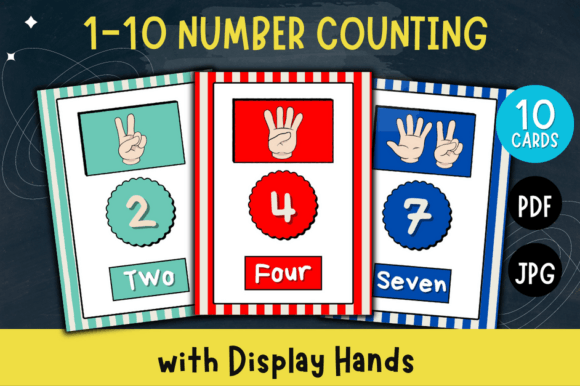
When we talk about teaching foundational numeracy, visual association is often the most powerful tool in a parent or educator's kit. 1-10 Number Counting with Display Hands is not a traditional typeface in the typographic sense; rather, it is a highly specific visual resource designed to bridge the gap between abstract numbers and physical reality. By utilizing the universal gesture of counting on one's fingers, this resource creates an immediate, tactile connection for young learners. The "display hands" act as a visual anchor, allowing children to see the physical representation of a number alongside the numerical symbol.
From a design perspective, the appeal of this resource lies in its clarity and distinct personality. It avoids the clutter often found in educational materials, focusing strictly on the relationship between the hand gesture and the digit. This minimalist approach ensures that the child's attention is not diverted by unnecessary background noise. For designers working in the educational sector, this resource offers a clean, modern aesthetic that feels professional yet approachable. It serves a dual purpose: it is both a functional counting aid and a visually pleasing component that can elevate the look of a classroom worksheet or a homeschooling curriculum.
Practical Applications in Modern Education
The versatility of 1-10 Number Counting with Display Hands extends well beyond simple flashcards. For educators and homeschooling parents, this resource is a cornerstone for building a comprehensive math unit. It works exceptionally well when printed and displayed on a classroom wall as a permanent reference guide. The visual hierarchy—the clear distinction between the number and the hand—helps students who struggle with dyscalculia or processing disorders, as they can rely on the physical cue of the fingers to verify their answer.
Furthermore, this resource is ideal for creating interactive learning stations. Imagine a "counting corner" where children match physical objects (like blocks or buttons) to the display hands on a printed mat. This hands-on approach transforms abstract counting into a kinesthetic activity. For content creators and publishers focusing on early childhood education, incorporating this visual language into digital apps or printable PDFs adds a layer of professionalism and usability that generic stock imagery cannot match. It signals to the user that the material has been thoughtfully designed with the child's cognitive development in mind.
Design Considerations and File Formats
When integrating 1-10 Number Counting with Display Hands into your projects, the availability of both PDF and JPEG files offers significant flexibility. The PDF format is essential for high-quality printing, ensuring that the lines of the hands remain crisp and the numbers do not pixelate, regardless of the printer's resolution. This is crucial for maintaining a professional standard in educational products that you might sell or distribute.
The JPEG format, on the other hand, is invaluable for digital integration. If you are a blogger writing about early learning strategies or a social media manager creating content for an educational brand, the JPEGs can be easily dragged and dropped into web layouts, Instagram stories, or video tutorials. The visual consistency provided by these files helps maintain a cohesive brand identity across multiple platforms. Whether you are designing a comprehensive workbook or a simple social media graphic, having a reliable asset library that includes resources like this counting tool streamlines the creative process.
Enhancing Engagement Through Visual Consistency
Consistency is a key driver of engagement in educational design. Children thrive on repetition and predictability. By using 1-10 Number Counting with Display Hands consistently across various learning modules—be it addition, subtraction, or simple counting—you create a familiar visual language for the student. This familiarity reduces cognitive load, allowing the child to focus entirely on the mathematical concept being taught rather than deciphering new visual cues.
For small business owners and entrepreneurs in the educational niche, this consistency translates directly to brand trust. When parents see a cohesive design language across your worksheets, apps, and marketing materials, they perceive your brand as organized and authoritative. It moves the perception from "homemade" to "professional publisher." This resource acts as a silent ambassador of quality, ensuring that every page of your curriculum feels connected and intentional.
Conclusion: A Foundational Asset for Learning
In the crowded market of educational resources, 1-10 Number Counting with Display Hands stands out for its simplicity and effectiveness. It addresses a fundamental need—teaching numbers 1 through 10—with a visual mechanism that is universally understood. For designers, marketers, and educators, it offers a plug-and-play solution that enhances the visual hierarchy of any project while maintaining a playful, engaging personality.
Ultimately, the value of this resource lies in its ability to make learning accessible. It removes barriers to understanding by providing a clear, visual bridge between the symbolic and the physical. Whether you are refining a homeschooling curriculum, designing a new educational app, or creating printable resources for a classroom, this counting tool provides the visual foundation necessary to help young learners master their first numbers with confidence.